John Hunter and the Book of Tut Bonus Buy — Is It Worth It?
The Bonus Buy in Book of Tut costs 100× the current stake for instant access to 10 free spins. At $1 per spin that is $100 per purchase. The expected return per purchase based on the 96.5% RTP is $96.50, producing a theoretical loss of $3.50 per transaction — the same house edge that applies to every spin.
Is Bonus Buy Worth It? Quick Answer
Buying the bonus doesn't change the math. House edge is the same either way — 3.5% on the 96.5% RTP. What changes is how fast that edge lands on you. Base game play spreads $3.50 of expected loss across 100 spins at $1; Bonus Buy concentrates the variance of 100 spins into a single $100 transaction. The feature makes sense for players who want the bonus round experience without 174 spins of base game, not for those expecting a mathematical edge over organic triggering. No selection bias applies to which expanding symbol is chosen in a purchased bonus — the random selection runs on the same probabilities as an organic trigger. Across large sample sizes, the distribution of Bonus Buy outcomes mirrors the distribution of organically triggered bonus outcomes. A session of 10 purchased bonuses at $1 stake represents $1,000 in wagering with an expected return of $965 — a $35 loss at 96.5% RTP. The practical experience of those 10 bonuses will include several that return less than $30 (below 30× the stake), some in the $30 to $150 range, and potentially one that significantly exceeds the purchase price if a retrigger chain occurs with a high-value expanding symbol. Understanding this distribution before committing to multiple Bonus Buy sessions prevents the incorrect conclusion that a poor result on one purchase predicts poor results on subsequent ones.
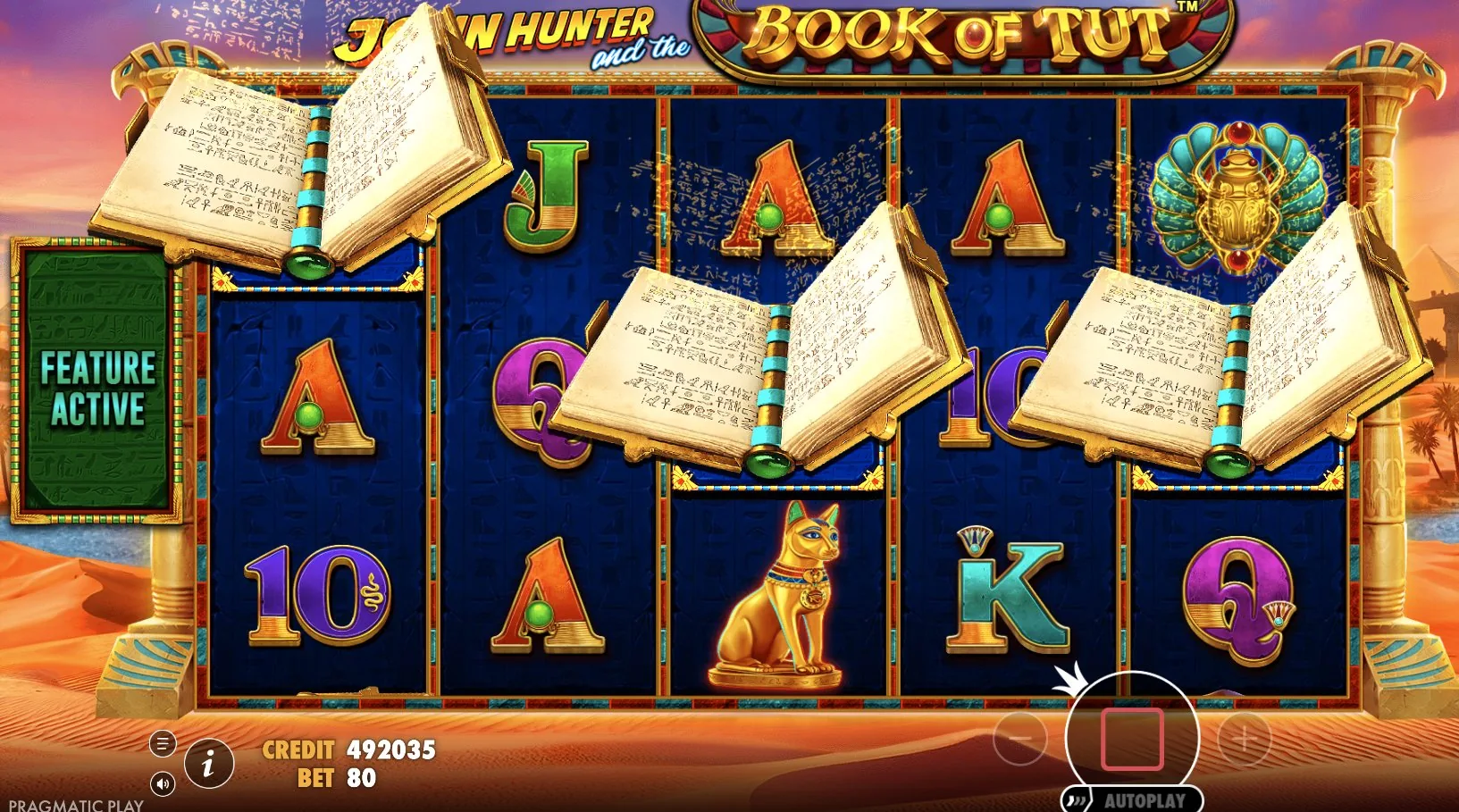
Does Bonus Buy change the expanding symbol selection?
No. The expanding symbol for purchased bonuses is selected by the same random process as organically triggered free spins. Each pay symbol has approximately equal selection probability regardless of how the bonus was initiated.
Bonus Buy Cost Breakdown by Stake
This table shows the purchase cost and expected return at common stake levels, based on the 96.5% RTP. Actual results deviate from these expected values due to high volatility — individual bonus sessions range from below 10× to above 500× the stake in practice. | Stake | BB Cost | Expected Return | Expected Loss | |---|---|---|---| | $0.10 | $10 | $9.65 | $0.35 | | $0.20 | $20 | $19.30 | $0.70 | | $0.50 | $50 | $48.25 | $1.75 | | $1.00 | $100 | $96.50 | $3.50 | | $2.00 | $200 | $193.00 | $7.00 | | $5.00 | $500 | $482.50 | $17.50 | | $10.00 | $1,000 | $965.00 | $35.00 |
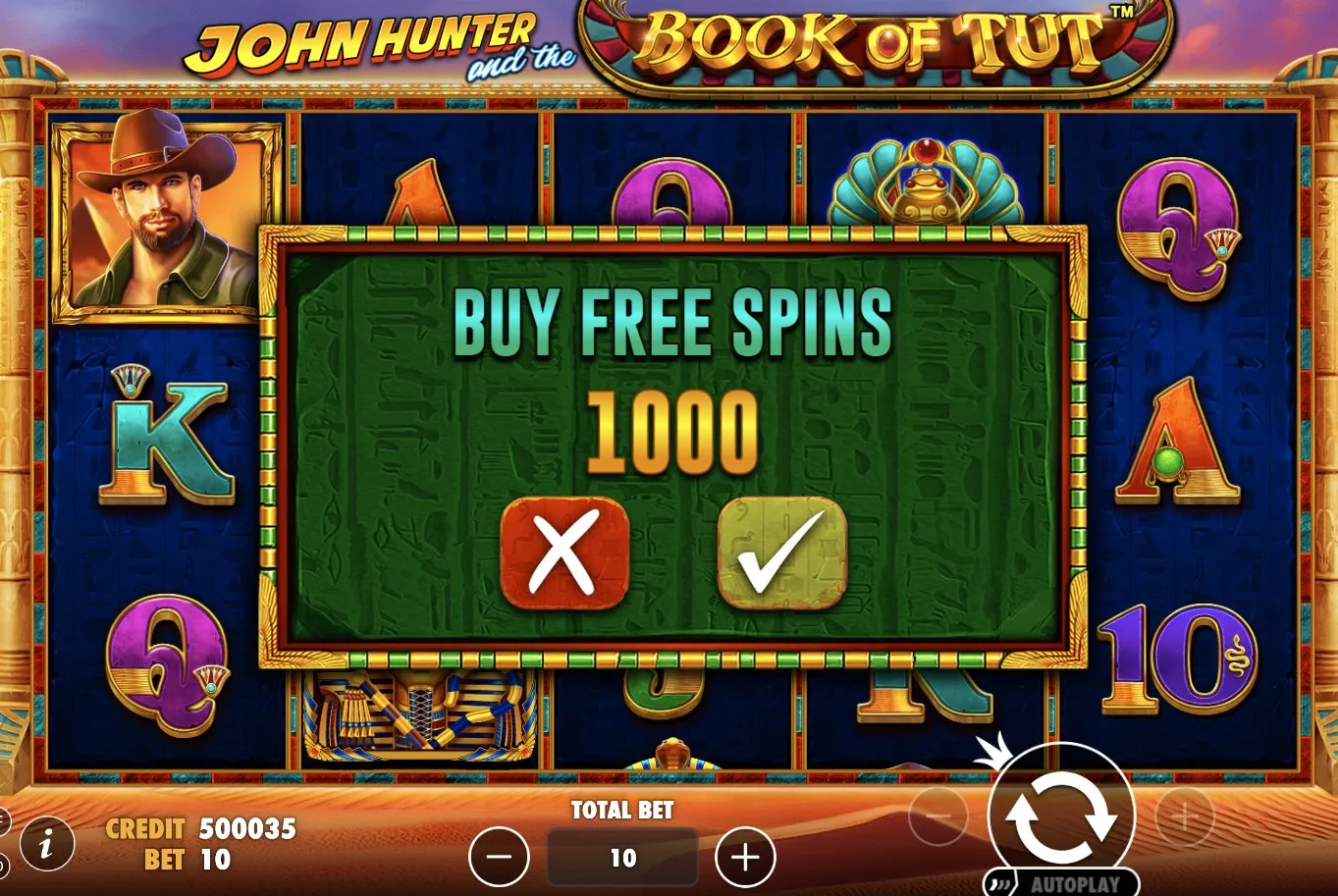
Can the Bonus Buy bonus retrigger?
Yes. The retrigger rules are identical for purchased and organic bonuses — three or more book scatters during free spins add 10 more spins with the same expanding symbol. There's no limit on the number of retriggers.
Comparing Bonus Buy to Base Game Wagering
Reaching the bonus via base game requires wagering an average of 174 spins. At $1 per spin that is $174 in total wagering before the first feature trigger. The expected loss across those 174 spins at 96.5% RTP is $6.09. In comparison, one Bonus Buy at $1 stake costs $100 with an expected loss of $3.50. On a per-bonus basis, the Bonus Buy produces a lower expected loss than grinding through the base game to reach the same number of bonus rounds. However, base game play also produces base game wins during the 174-spin wait — hits occur on roughly every third spin at the 33.33% hit rate. Those wins partially offset the cost of reaching the bonus organically, narrowing the practical difference between the two approaches. A precise comparison: grinding 174 base game spins at $1 produces an expected 58 winning spins, with total expected winnings from those hits of approximately $167.91 (at 96.5% RTP on $174 wagered). Adding the bonus payout, the net cost per organic bonus session is approximately $6.09 in expected loss. The Bonus Buy at $1 stake costs $100 with expected return of $96.50 — a $3.50 expected loss per transaction, not counting the base game spins that would have been played otherwise. Neither method changes the mathematical edge; the difference is in session structure, time efficiency, and the size of the bankroll committed per bonus event.
Is Bonus Buy available in all countries?
No. The feature is disabled in the United Kingdom under UKGC regulations. Other regulated markets may also restrict feature purchase products. The Buy Free Spins button simply does not appear in restricted jurisdictions.
When Bonus Buy Makes Sense
The Bonus Buy is practical in several concrete scenarios. The first is limited session time — if the goal is to experience the expanding symbol mechanic within a defined number of spins, buying the bonus avoids the variable wait that base game grinding entails. The average 174-spin wait can extend to 400 or more spins in one out of eight sessions due to variance; a purchased bonus eliminates that uncertainty entirely. The second scenario is bankroll management during an extended dry streak. After 250 or more base game spins without a trigger, some players choose to purchase one bonus rather than continue base game wagering. This neither improves nor worsens expected return — the RTP is 96.5% regardless of entry method — but it shifts the variance exposure and provides a definitive bonus outcome rather than continued waiting. The third scenario involves research and comparison. Players evaluating Book of Tut against other 'Book of' slots may prefer to purchase bonuses directly to observe multiple expanding symbol selections and payout outcomes without the time cost of organic grinding. The Bonus Buy's practical limitation is the large upfront amount: at stake sizes above $2, a single purchase exceeds $200, making careful bankroll allocation necessary before using the feature.
Bonus Buy Availability and RTP
The purchased bonus plays at the same RTP as organically triggered free spins — 96.5% in the default configuration. No separate RTP applies to the bought feature, unlike some competing slots where feature purchase carries a slightly different return. Casinos operating the 94.5% RTP variant of Book of Tut apply that reduced return to Bonus Buy purchases as well. At 94.5%, the expected loss per $100 Bonus Buy purchase rises to $5.50 versus $3.50 at 96.5% — a $2 difference per transaction that compounds meaningfully across multiple purchases in a single session. At ten purchased bonuses, the total expected loss difference between the two RTP versions amounts to $20 ($35 at 96.5% vs $55 at 94.5%). Verifying the active RTP before using the Bonus Buy feature repeatedly is the single most impactful step a player can take to manage session costs. The Bonus Buy is unavailable in the United Kingdom, Sweden, and certain other regulated markets. In these jurisdictions, the Buy Free Spins panel does not appear in the game interface regardless of the casino's configuration.
Practical Bonus Buy Decision Framework
Before buying the bonus, check the active RTP. At 96.5% the cost per feature is $3.50 expected loss per $100 purchased. At 94.5% it rises to $5.50. If the RTP cannot be confirmed, treat it as 94.5% for budgeting purposes. Second, set a Bonus Buy budget separate from the base game budget. A reasonable structure is allocating no more than 50% of the total session budget to feature purchases — so a $300 session budget allows up to $150 in Bonus Buy spending, which at $1 stake represents one to two purchases. Third, decide in advance how many bonuses to buy before stopping. Chasing consecutive low-paying bonus results with additional purchases is the primary risk factor for exceeding intended spend. A pre-commitment of 'maximum three Bonus Buys per session' eliminates the decision under conditions of recency bias. Fourth, track results across at least 20 to 30 purchased bonuses before drawing conclusions about the slot's behavior — sample sizes below 10 are statistically insufficient to distinguish between normal variance and unusual streaks. At $1 stake, tracking 25 Bonus Buys requires $2,500 in wagering budget, making the analysis financially significant. The demo version allows unlimited Bonus Buy purchases at no cost, making it the appropriate tool for building a data sample before committing real money to the feature purchase format.
Variance across multiple bought bonuses
Variance across multiple bought bonuses matters more than single-session results. At $1 stake per purchased bonus ($100 per transaction), the following outcomes are statistically plausible across ten purchases (total $1,000 wagered, expected return $965): Between six and eight of the ten bonuses will pay below the $100 purchase price. One to three bonuses will pay between $100 and $300. Zero to one bonus will pay above $300, with outcomes above $500 representing roughly a 5% to 8% probability per bonus event (estimated from available variance data). A retrigger chain that produces a 200× to 500× payout occurs in a small fraction of bonus rounds — the exact probability is not publicly disclosed by Pragmatic Play, but independent testing across 11.7 million rounds confirms the theoretical maximum of 5,500× has been documented. Across 100 purchased bonuses at $1 stake ($10,000 total wagered), the expected return narrows toward $9,650, but individual session results across those 100 events will still include multiple sessions of three to five consecutive low-paying bonuses — a normal outcome at this volatility level, not evidence of a malfunction or unfavorable configuration.