John Hunter and the Book of Tut — Tips & Strategy

Five data-based tips for John Hunter and the Book of Tut — built from the published RTP, the ~174-spin bonus interval and our own demo testing. No guaranteed-win claims, just the math behind smarter stake and bankroll decisions.
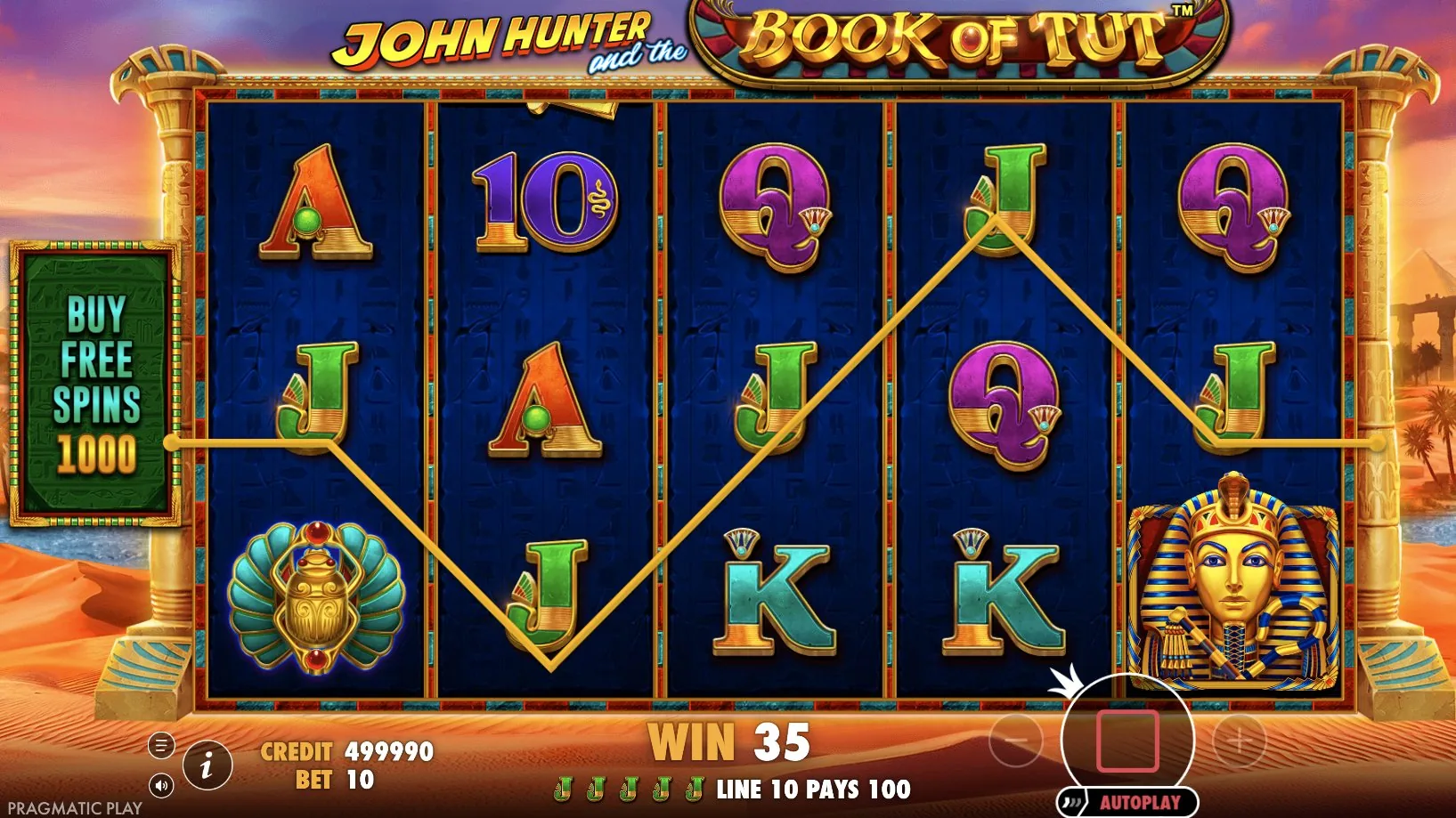
Book of Tut win of 35 credits with active paylines highlighted showing line 10 pays 100

Five Data-Based Tips for Book of Tut

Verify the RTP Version Before Depositing

Pragmatic Play licenses this slot in two RTP configurations: 96.5% (default) and 94.5% (operator-reduced). The difference appears small but translates to a meaningful cost difference — playing 500 spins at $1 on the 94.5% version costs $10 more in expected losses than the 96.5% version. Check the paytable's information pages in the actual casino before depositing; the RTP figure is disclosed on page 3 of the in-game rules. Casinos legally required to disclose this information include those operating under UKGC, MGA, and Swedish regulator licenses. At online casinos not subject to strict disclosure requirements, the active RTP version may not be easily identifiable, making licensing jurisdiction a relevant factor in casino selection for this slot.

Size the Stake for Bonus Frequency

At this slot's volatility level — 5 out of 5 — the free spins bonus lands on average every 174 spins. At $1 per spin that represents $174 in expected wagering before a feature trigger. A stake above 5% of your session bankroll creates real risk of running out before the bonus shows up. For a $200 session bankroll, a $0.50 stake (174 spins = $87 expected cost to first bonus) offers more sessions than a $2 stake (174 spins = $348 expected cost). That doesn't guarantee the bonus within 174 spins — variance means dry stretches of 300 to 400 spins occur in roughly 13% of sessions at the standard bonus frequency. The 13% figure means that in roughly one out of eight sessions, the bonus will not appear within double the average interval.

Understand the Bonus Buy Math

The Bonus Buy at 100× stake is priced to return the standard RTP of 96.5% in expectation. At $1 stake the purchase costs $100 and the expected return is $96.50. The purchased bonus has the same random expanding symbol selection as an organic trigger — no symbol weighting difference applies. The point of Bonus Buy is skipping 174 spins of base game. The downside is the same variance risk — there's still that 13% chance of a bonus that barely covers its cost, and consecutive low-paying bought bonuses are possible within normal statistical ranges. Over ten purchased bonuses at $1 stake (total outlay $1,000), the expected total return is $965. Individual results across those ten bonuses will range widely: some will pay less than 10× of the purchase price, and occasionally one will approach 50× or higher with a retrigger chain.

Track the Expanding Symbol Selection

The expanding symbol is chosen from all regular pay symbols — John Hunter, Pharaoh, Cat, Scarab, and the five royals. Each has an equal selection probability of roughly 1 in 9. The John Hunter symbol pays 500× per payline for five of a kind; a full-reel expansion across all five reels on multiple paylines drives the theoretical 5,500× maximum. The Pharaoh pays 200× for five of a kind. Low-value royals (10, J, Q) pay 5× to 10× per line. When planning a session budget, the expected bonus payout does not change with expanding symbol selection — RTP is calculated across all possible symbol outcomes. A single bonus where John Hunter covers four or five reels produces a substantially larger result than a royal expansion covering the same number of reels. The non-adjacent pays rule means expanded John Hunter on reels 1, 3, and 5 still counts as a full winning combination.

Set a Session Stop-Loss Before Playing

High volatility at 5/5 produces sessions where 200 to 300 consecutive base game spins without a bonus are within the normal statistical distribution. At $1 per spin, 300 spins represents $300 in wagering. Setting a stop-loss before you play — say, 200 spins or $200 — stops you from chasing during a dry stretch. A win target of 50-100× the session stake gives you a natural exit on a good session. Neither changes the RTP, but both keep the range of outcomes from getting extreme. A session bankroll of at least 200× your stake covers roughly two average bonus intervals. That's the floor for playing this volatility without running out of spins before the bonus ever fires.

Play Demo

Related Pages